



Petrochemical catalyst protection and recovery relies on filtration and coalescing systems designed to remove solid and liquid contaminants from feed streams before they reach downstream catalysts. Pall provides filtration and coalescing solutions for petrochemical applications that help limit catalyst exposure to particulates, water, and liquid contaminants. These solutions are available in a range of materials and configurations to support catalyst protection and recovery across a variety of petrochemical feed streams.
What challenges affect catalyst performance in petrochemical processing?
Catalysts used in petrochemical processing can be affected by contaminants present in feed streams. These contaminants may originate from upstream operations, storage, or handling and can vary based on process conditions and feed composition.
Common challenges include the presence of:
- Solid particles carried in liquid or vapor streams
- Free water entering hydrocarbon processes
- Dispersed water suspended within hydrocarbon phases
- Other liquid contaminants present in feed streams
If these materials are not managed upstream, they may reach the catalyst bed and interfere with downstream processing. Filtration and coalescing systems are used in petrochemical applications to address these challenges by removing solids and separating immiscible liquids before catalyst contact.

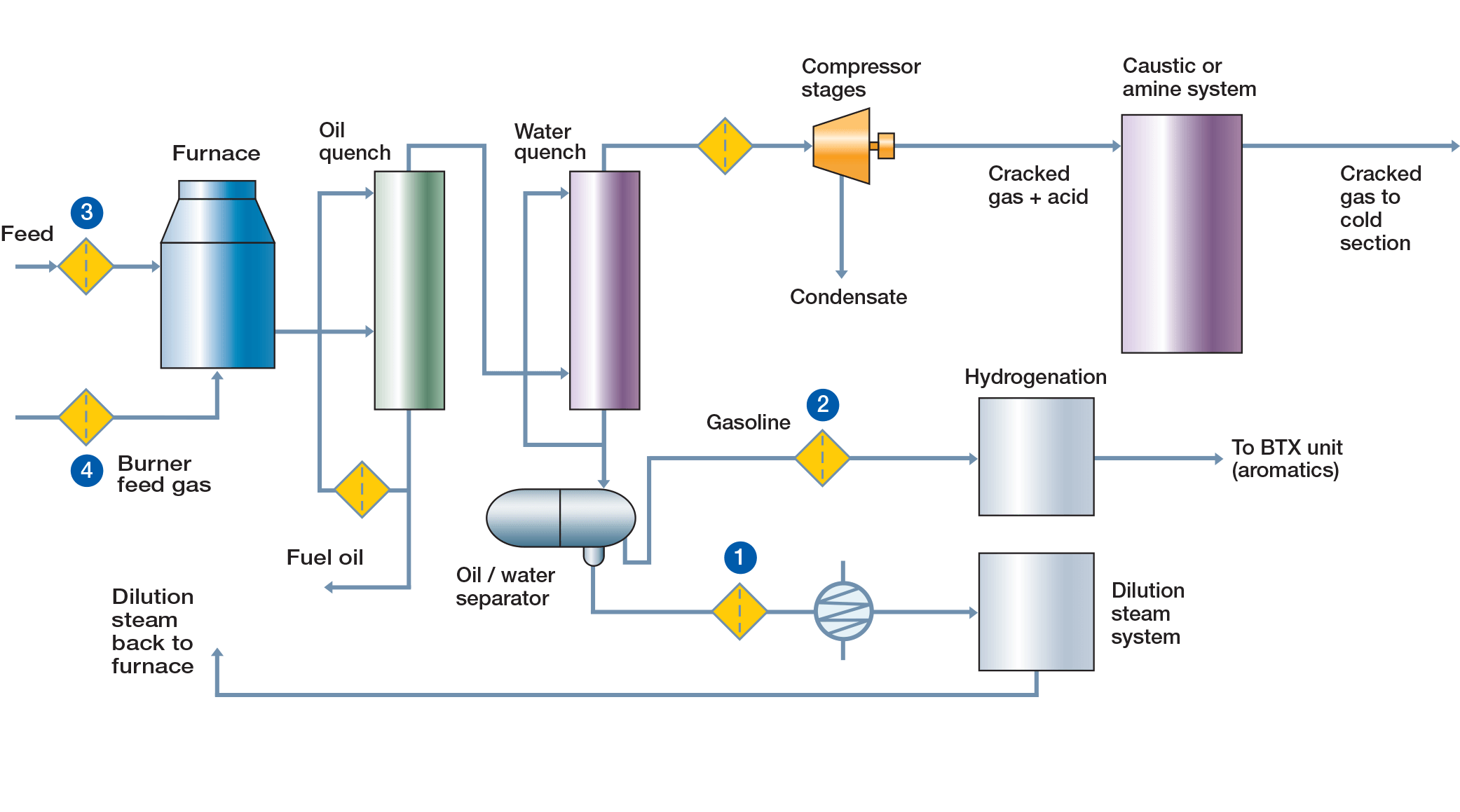
Filtration and coalescing are applied at multiple stages in ethylene production to manage contaminants before catalyst contact.
How does filtration support petrochemical catalyst protection?
Filtration systems for petrochemical catalyst protection are designed to remove solid contaminants from liquid or gas feed streams. These systems are used upstream of reactors and other critical process equipment.
Pall filtration solutions for catalyst protection are available in different media types, pore sizes, and cartridge designs. They are selected based on process requirements such as contaminant size, flow rate, temperature, and chemical compatibility. Filtration helps reduce the amount of particulate matter carried into downstream catalyst beds.
How do coalescers protect catalysts from liquid contaminants?
Coalescing systems are used when liquid contaminants such as water are present in hydrocarbon streams. These systems combine small dispersed droplets into larger droplets that can be separated from the continuous phase.
Pall coalescers use staged separation to remove dispersed water and other immiscible liquids without disarming. Liquid/ Liquid coalescers are applied in liquid feed and Liquid/ Gas Coalescers for gas feed required prior to catalyst contact.
What Pall solutions are used for petrochemical catalyst protection and recovery?


How are Pall catalyst protection solutions typically applied?
Pall filtration and coalescing solutions are used in petrochemical processing to manage contaminants in feed streams before they reach downstream catalysts. Applications are defined by process conditions, contaminant type, and system configuration.
Typical applications include:
- Installation upstream of catalyst beds to manage solids and liquid contaminants
- Use in liquid or vapor feed streams where particulate matter is present
- Application in hydrocarbon streams requiring separation of free or dispersed water
- Integration into systems designed for catalyst protection and recovery
Filtration and coalescing systems are selected and configured based on operating conditions and the nature of the feed stream to support consistent protection of downstream process equipment.
Frequently Asked Questions
What types of contaminants are addressed in catalyst protection systems?
Catalyst protection systems address contaminants such as solid particles, free water, dispersed water, and liquid hydrocarbons present in petrochemical feed streams.
Are filtration and coalescing systems used together?
Yes. In some applications, filtration is used upstream to remove solids, followed by coalescing to separate immiscible liquid phases from the process stream.
Can Pall solutions be used in different petrochemical processes?
Pall filtration and coalescing solutions are available in a range of materials and configurations to support a variety of petrochemical feed streams and operating conditions.
How are systems selected for a specific application?
System selection depends on factors such as process conditions, contaminant type, flow rate, temperature, and chemical compatibility.
Discuss Your Catalyst Protection Application