



Utility fluids like water, steam, air and gases are essential to food and beverage production and directly impact product quality, safety and compliance. Utilities filtration helps manage contamination risks across these critical process utilities by removing particulates, microorganisms and aerosols that can affect production performance. By supporting utility quality throughout the process, filtration helps maintain consistent operating conditions, support regulatory requirements and protect product integrity.
What is utilities filtration in food and beverage processing?
Utilities filtration refers to the treatment of process utilities such as water, steam, air, and gases to remove contaminants that can affect product quality and safety. These utilities are widely used across production, from ingredient preparation to packaging, and can introduce particulates, microorganisms, and aerosols if not properly controlled.
Filtration helps manage these risks by supporting consistent utility quality throughout the process.
Why does utilities filtration matter for product quality and safety?
Utilities form the backbone of food and beverage manufacturing, and their quality directly affects production outcomes. Contamination in utilities can lead to operational challenges and regulatory concerns.
A structured approach to filtration helps address these risks by:
- Reducing contamination potential in utilities
- Supporting regulatory alignment
- Contributing to consistent production conditions
This approach supports both product integrity and operational reliability.

Which utilities require filtration in food and beverage production?
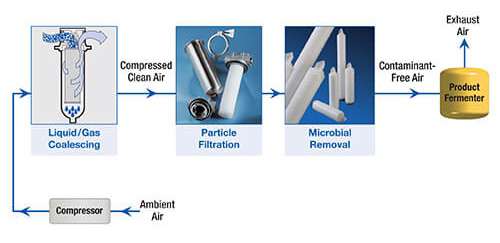
Air and gas filtration
Protect compressed air and process gases used throughout food and beverage production
Compressed air and process gases are used across production, packaging and storage operations. Effective air and gas filtration helps control particulates, aerosols, odors and microorganisms that can affect product quality, equipment performance and process reliability.
- Liquid and gas coalescers – Remove aerosols to prevent corrosion and ensure efficient downstream equipment operations
- Particle filters – Capture airborne contaminants, extending the life of final filters
- Activated carbon filters – Eliminate odors and volatile compounds
- Microbial removal filters – Validated to remove bacteria and bacteriophages in both dry and humid environments. Validation approaches are discussed in evaluating microbial retention performance in sterile air and gas filters
Additional guidance on filter performance and selection is available in attributes of sterilizing grade air and gas cartridge filters and liquid and aerosol bacterial challenge testing in sterile air filter validation
Filtration performance is influenced by multiple physical removal mechanisms described in mechanisms of air and gas filtration

Water filtration
Protect water quality from incoming treatment to utility applications
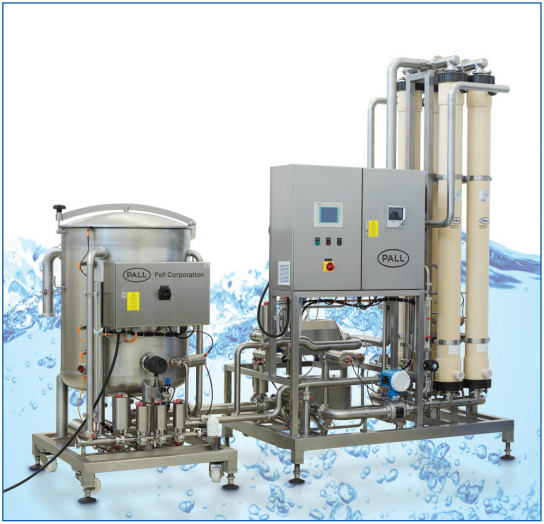
Water is used throughout food and beverage production, from ingredient preparation and cleaning operations to utility systems. Effective water filtration helps support product quality, operational efficiency and consistent process performance.
As a trusted partner, Pall has installed hundreds of Pall Aria hollow fiber membrane systems and thousands of clarification, polishing and sterilization solutions worldwide. We customize each system to meet your plant’s technical and economic requirements.
Applications include:
- Incoming water treatment
- Process water recycling and monitoring
- Utility water purification for rinsing, cleaning and product pushing
Considerations for protecting water storage systems are outlined in sterile vent filtration on hot and ozonated water tanks
Steam filtration
Maintain clean steam for food and beverage processing applications
Steam is widely used for heating, sterilization and direct product contact applications in food and beverage manufacturing. Steam filtration helps remove rust, scale and other contaminants that may affect utility quality and process performance.
Steam used in food and beverage processing must be free of rust, scale and debris. Pall’s PSS Plus steam filters, built on over 60 years of expertise in sintered stainless steel, deliver long service life and cost-effective performance across a wide range of applications.
Common applications:
- Blanching, steam peeling, and thermal processing
- Aseptic sterilization and steam tracing
- Direct steam injection and proofing ovens
- Labeling tunnels, can headspace flushing, and extrusion
- Odor removal and indirect heat exchange
- Equipment surface cleaning and carcass treatment
Our filters help ensure clean steam for safe, efficient and compliant operations.

How does an integrated utilities filtration strategy support operations?
An integrated utilities filtration strategy considers all process utilities together rather than as separate systems. This approach aligns filtration design with production goals and process requirements.
A holistic strategy helps:
- Reduce contamination risks across utilities
- Support maintenance efficiency
- Improve consistency in production conditions
What challenges does utilities filtration address?
Utilities filtration is used to manage key challenges in food and beverage production, including:
- Contamination risks from air, water, steam, and gases
- Variability in utility quality
- Maintaining alignment with regulatory expectations
Addressing these challenges helps support controlled and consistent processing environments.
How can utilities filtration be optimized for your process?
Optimizing utilities filtration starts with understanding how each utility is used throughout production and where contamination risks may occur. Aligning filtration solutions with these points of use supports effective control of process utilities.
Contact Pall filtration experts to discuss your utilities filtration requirements.
Frequently Asked Questions
What is utilities filtration in the food industry?
Utilities filtration is the treatment of process utilities such as water, steam, air, and gases to remove contaminants that may affect product quality and safety.
Why is compressed air filtration important in food and beverage production?
Compressed air can contain particulates, oil vapor, and microorganisms. Filtration helps manage these contaminants to support clean and controlled processing environments.
What does steam filtration do in food processing?
Steam filtration removes particulates and contaminants from steam systems used in heating and sterilization processes, helping maintain utility quality.
Which utilities typically require filtration?
Common utilities requiring filtration include compressed air, process gases, water, and steam, as they are widely used throughout production processes.
How does filtration support regulatory requirements?
By helping control contaminants in utilities, filtration supports processes designed to align with regulatory expectations for product safety and quality.

-
Mechanisms of Air and Gas Filtration
Download:
Discuss your utilities filtration requirements