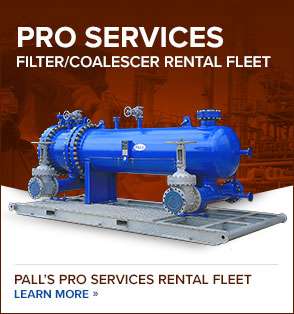



Liquid and gas separation technologies are used to remove liquid droplets and solid particles from gas streams in oil and gas operations. These technologies help protect downstream equipment, support stable operation and reduce the effects of liquid carryover.
Principles of liquid and gas separation
Liquid droplets and solid particles can form in gas streams during production, transportation and processing. If not removed, these materials may affect compressors, treating systems and other downstream equipment.
What is liquid and gas separation?
Liquid and gas separation is the process of removing liquid droplets and solid particles from a gas stream to reduce carryover into downstream equipment.
Separation technologies are typically applied upstream of sensitive equipment to limit exposure to liquids and solids while maintaining gas flow.
How does liquid and gas separation work?
Liquid and gas separation works by applying physical mechanisms that cause droplets or particles to separate from the gas stream based on density, inertia or flow behaviour.
These mechanisms influence how droplets move relative to the gas and where separation can occur within a vessel or separation element.

Separation mechanisms used in gas systems
Several physical mechanisms are used to remove liquids and solids from gas streams. Each mechanism acts differently depending on droplet size, particle mass and operating conditions.
What mechanisms are used to remove liquids and solids from gas?
Liquids and solids are removed from gas streams using gravity settling, centrifugal separation, inertial impaction and filtration or coalescence.
These mechanisms may be applied individually or in combination to achieve the required separation performance:
Common types of liquid and gas separators
Different separator designs are selected based on process conditions, gas composition and separation requirements across oil and gas operations.
See Oil and Gas Midstream Filtration
What types of liquid and gas separators are used in oil and gas?
Several types of liquid and gas separators are used in oil and gas operations including gravity separators, centrifugal separators, filter vane separators and liquid gas coalescers.
Each separator type relies on different mechanisms to achieve liquid and solid removal:
Liquid gas coalescers
Liquid gas coalescers are used where fine liquid aerosols must be removed from gas streams. These droplets are often too small to be removed efficiently by gravity or centrifugal separation alone.
What is a liquid gas coalescer?
What is a liquid gas coalescer?
A liquid gas coalescer is a separation device that removes fine liquid droplets from a gas stream by capturing and merging droplets within a fibrous or porous medium.
How does a liquid gas coalescer work?
A liquid gas coalescer works by collecting small droplets on the coalescing media where they merge into larger droplets and drain from the gas stream.
As droplets are removed, the gas exits the separator with reduced liquid content.
What is the difference between a separator and a coalescer?
Separators primarily remove bulk liquids from gas streams while coalescers are designed to remove fine liquid aerosols that are difficult to separate by gravity alone.
In some systems, both devices are used together to achieve required performance.
Liquid aerosols may form in gas streams through condensation from saturated vapor, atomization and liquid entrainment during operation. These fine droplets can remain suspended in the gas unless specialised separation media is used.
Separation performance is influenced by gas velocity, droplet size distribution, operating pressure and system design.
Liquid gas separation performance is evaluated using laboratory testing, field testing and analysis of liquid carryover and pressure drop.
Coalescer sizing is influenced by gas flow rate, operating pressure, temperature and expected droplet size distribution. Proper sizing helps balance separation efficiency and pressure drop.
- DOP testing: DOP testing is used to characterise fractional efficiency using controlled aerosol challenges.
- LASE testing: LASE testing applies alternative aerosol generation and measurement approaches to evaluate coalescer behaviour under different challenge conditions.
Separator design affects droplet capture, drainage and re entrainment risk. Chemical treatment of the gas stream may influence droplet behaviour and separation performance.
Field testing is used to assess coalescer behaviour under operating conditions.
Test procedures may involve sampling, monitoring of operational parameters and analysis of liquid carryover over time.
Frequently Asked Questions
Why is liquid gas separation important
Liquid gas separation is important because entrained liquids and solids can damage equipment, reduce efficiency and affect system reliability.
Effective separation supports continued operation and protection of downstream processes.
What causes liquid aerosols to form in gas streams
Liquid aerosols can form in gas streams through condensation from saturated vapor, atomization and liquid entrainment during production and processing.
These fine droplets can remain suspended in the gas unless specialised separation technology is applied.
How is liquid gas separation performance evaluated
Liquid gas separation performance is evaluated using laboratory testing, field testing and analysis of liquid carryover and pressure drop.
Different evaluation approaches provide insight into separation behaviour under controlled and operating conditions.
When are coalescers used instead of separators
Coalescers are typically used when fine liquid aerosols must be removed and gravity or centrifugal separation alone does not provide sufficient removal.
Need help with liquid and gas separation challenges? Contact our team to discuss separation technologies, applications and system considerations.